How to Use a Small Loan to Bridge the Gap Between Paychecks

Sarah Jenkins

Sarah Jenkins

Managing Editor, Borrowing · Updated August 2026

Finance Guide
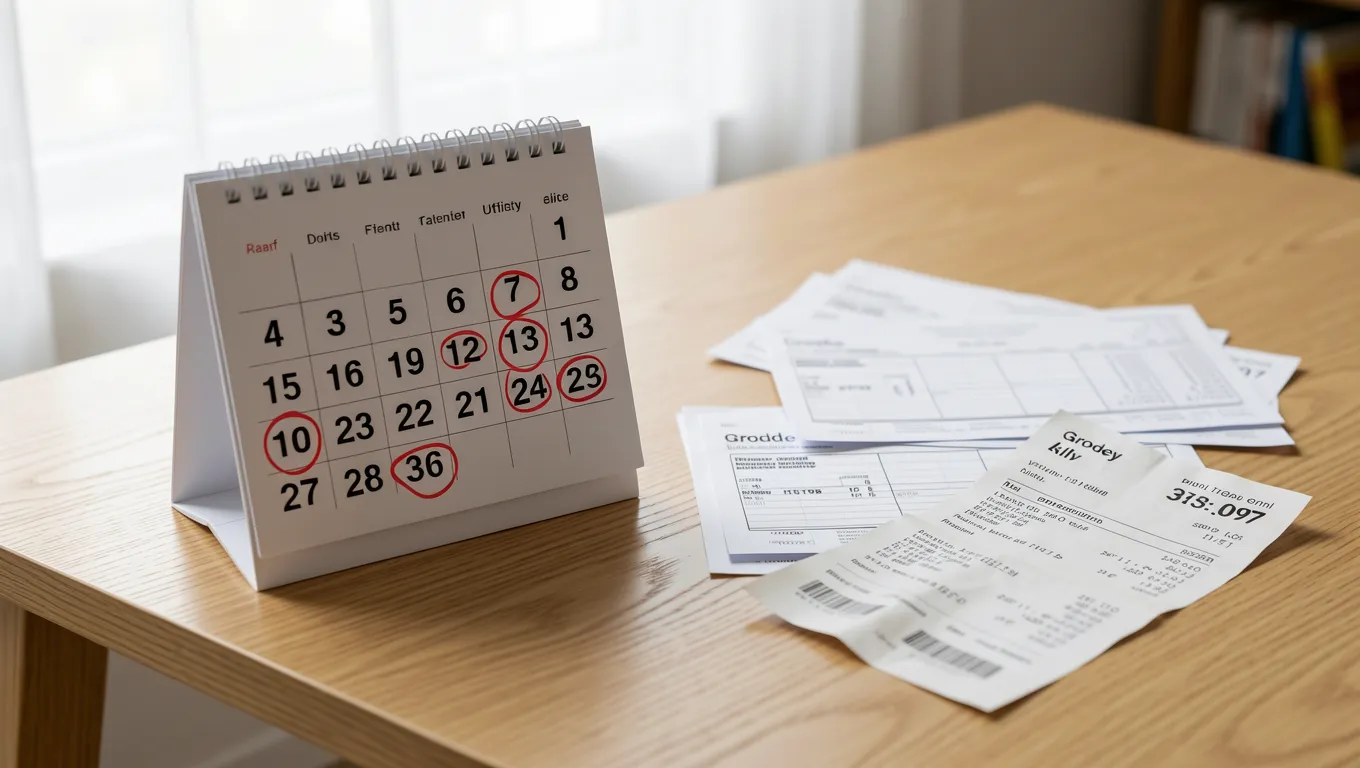
Calendar with circled dates next to household bills

How to Use a Small Loan to Bridge the Gap Between Paychecks

Imagine it is the 20th of the month. You have successfully managed your budget for three weeks, but an unexpected car repair or a sudden spike in utility costs has left you with a critical liquidity gap. Your next paycheck isn't due until the 1st, leaving you $450 short for essential expenses like groceries and gasoline. In 2026, as economic volatility continues to influence household cash flow, many Americans find themselves navigating these mid-month squeezes. This is where a small personal loan might act as a temporary bridge, helping you maintain stability until your next income cycle arrives.

It is vital to understand that using debt to cover living expenses is a strategic decision, not a casual one. When done correctly, a small loan can prevent late fees on rent or the high costs of predatory lending. However, if used incorrectly, it can lead to a cycle of perpetual debt. For instance, in 2026, typical personal loans for these types of needs might range from 5% to 36% APR, depending heavily on your credit profile and the lender's specific criteria. Most small bridge loans are sought in amounts between $500 and $3,000, with many modern lenders offering approval decisions within 24 to 48 hours.

This article is designed to provide a professional framework for evaluating whether borrowing is the right move for your specific situation. We will walk through the mathematical realities of interest, compare different borrowing strategies, and outline a step-by-step method for ensuring this loan remains a temporary bridge rather than a permanent weight on your finances. By the end of this guide, you should have the clarity needed to decide if a small loan is a viable tool for your 2026 financial toolkit.

The Mathematics of the Mid-Month Squeeze: Why Timing Matters

To manage a cash flow gap effectively, you must first understand the mathematical difference between your monthly income and your immediate liquidity needs. A cash flow gap occurs when your essential outflows (rent, utilities, food) are due before your inflows (paychecks, tax refunds, side-hustle payments). Using a loan to bridge this gap is essentially borrowing from your future self to pay for your present requirements.

Let's look at a concrete example of how the math plays out. Suppose you need $1,500 to cover an unexpected emergency and rent shortfall. If you secure a small personal loan with a 12% APR over a 12-month term, your monthly payment would be approximately $134.70. While this solves the immediate problem of the $1,500 gap, it creates a new, smaller obligation for the next year. You must ensure that your future income can comfortably absorb this $134.70 monthly deduction without creating a new gap.

The timing of the loan is just as important as the amount. If you borrow money on the 25th to cover bills due on the 26th, but your next paycheck doesn't arrive until the 5th of the following month, you are only bridging a ten-day gap. You must calculate exactly how many days or weeks this loan needs to 'carry' you. If the timing is off by even a few days, you may find yourself in the exact same position when your next paycheck arrives, effectively doubling your problem.
Smartphone showing a digital banking and finance app

Comparing High-Interest Payday Loans vs. Small Personal Loans

When faced with an immediate need for cash, many people are tempted by the speed of payday loans or certain high-interest short-term credit products. However, in 2026, it is more important than ever to understand the long-term cost implications of these choices. A comparison between a traditional small personal loan and a predatory payday loan reveals a staggering difference in total cost.

Consider two scenarios for a $500 emergency expense:

  • Scenario A: The Payday Loan. You borrow $500 with an APR that effectively reaches 400% due to short-term fees and high interest. If you cannot pay it back by your next paycheck, the debt can roll over, quickly ballooning into a much larger sum.
  • Scenario B: The Personal Loan. You secure $500 through a personal lender at an 18% APR with a repayment term of three months. Your monthly payment is roughly $174, and you will have paid back the total amount in about 90 days without the risk of extreme interest compounding.
The trade-off is often speed versus cost. While payday loans are marketed as 'instant' solutions, they often create a cycle where borrowers must take out new loans to pay off old ones. A personal loan via a resource like Hard Money Loans or other matching services may offer more structured terms that allow for a predictable exit from the debt. Always prioritize the option that offers a fixed repayment schedule and a clearly defined end date.

A Four-Step Framework for Using a Loan as a Financial Bridge

If you have determined that borrowing is necessary, do not simply apply for the first amount offered. Instead, follow this professional decision framework to ensure the loan serves its intended purpose: bridging the gap without breaking your budget.

  1. Audit Your Gap: Identify the exact dollar amount required to reach your next payday. Do not round up excessively; only borrow what is strictly necessary for essential survival and obligations.
  2. Analyze Your Future Cash Flow: Look at your projected income for the next three months. If you take a loan today, can your budget absorb the monthly payment without causing another gap next month?
  3. Match Term to Windfall: Try to align the loan term with your expected financial stability. If you expect a large tax refund or bonus in four months, consider a shorter-term loan that aligns with that influx of cash.
  4. Automate the Exit: Once the loan is secured and used to stabilize your situation, set up automatic payments immediately. This ensures that as soon as your income returns to normal, the debt is being systematically dismantled.
By following these steps, you move from a reactive state of financial panic to a proactive state of cash flow management. You are no longer just 'getting money'; you are executing a strategic liquidity maneuver.

Avoiding the Debt Trap: When a Bridge Becomes a Permanent Weight

The most significant danger of using small loans to bridge gaps is the psychological shift that occurs when borrowing becomes a habit. Many borrowers fall into what economists call the 'debt treadmill,' where each new loan is used not just for essentials, but to cover the interest payments from previous loans. Warning: If you find yourself taking out a new loan to pay off the monthly installment of an old one, you are no longer bridging a gap; you are drowning in it.

Common mistakes include:

  • Using bridge funds for non-essential lifestyle spending. Using a $1,000 loan to cover rent (essential) and a new television (non-essential) is a fundamental error that guarantees future hardship.
  • Ignoring the impact of interest on your total debt load. Many people focus only on the monthly payment and forget that a high APR can significantly increase the total amount paid over the life of the loan.
  • Failing to adjust spending after the bridge is built. Once the immediate crisis has passed, it is tempting to return to previous spending habits. However, you must continue living within your original budget to accommodate the new loan repayment.
To avoid these pitfalls, treat every dollar of the loan as 'pre-spent' money that belongs to the lender. The moment it hits your bank account, mentally subtract the total interest cost from your available balance. This mindset shift helps prevent the illusion that you have received a windfall.

The Role of Real-Time Cash Flow Data in 2026 Lending

In 2026, the landscape of personal lending has become increasingly sophisticated. Many lenders now look beyond traditional credit scores to understand a borrower's true ability to repay a small bridge loan. This often involves analyzing real-time cash flow data through secure connections to your bank accounts.

Lenders may use this information to see that while you have a temporary gap today, your overall income trends are stable and your essential bills are consistently paid on time. This can be a significant advantage for borrowers who might have a lower credit score due to past mistakes but demonstrate excellent current cash flow management. According to data often cited by organizations like Experian, real-time data provides a more accurate picture of financial health than static credit reports alone.

However, this increased scrutiny means you must be prepared to provide transparency. If you are applying for a loan to bridge a gap, ensure your digital banking statements clearly show the income and expense patterns that support your claim. The more predictable your cash flow appears in 2026's digital-first lending environment, the better your chances may be of securing favorable terms. Remember, transparency is your most valuable asset when navigating modern credit applications.

Transitioning from Borrowing to Building an Emergency Fund

The ultimate goal of using a small loan as a bridge should be to ensure you never have to do it again. A bridge is meant to get you across a temporary obstacle, not to become the ground you walk on. Once your immediate gap is bridged and your loan is being repaid, you must pivot your focus toward building an emergency fund.

Financial experts generally recommend having three to six months of essential expenses saved in a high-yield savings account. While this may seem daunting when you are currently using loans to pay for groceries, the transition starts with small, incremental steps:

  • The Micro-Savings Approach: Even saving $20 per paycheck can build momentum. In 2026, many banking apps allow for 'round-up' savings that automate this process without you noticing.
  • The Windfall Rule: If you receive a tax refund, a work bonus, or a gift, commit at least 50% of it directly to your emergency fund rather than increasing your lifestyle spending.
  • The Expense Audit: Every six months, review your subscriptions and recurring costs. Redirecting the money from a canceled subscription into a savings account is an easy way to build liquidity.
By treating every bridge loan as a lesson in cash flow management rather than just a quick fix, you turn a potential financial crisis into a stepping stone toward long-term stability. The goal is to move from being a borrower to being a saver, ensuring that the next unexpected car repair is merely an inconvenience rather than a debt-inducing emergency.

Frequently Asked Questions

Is it actually a good idea to use a small loan for my monthly bills? +
It may be a wise tactical move if the cost of the interest is lower than the penalties you would face from late payments. For example, if a loan prevents a $100 late fee on your rent and costs only $20 in interest, it is mathematically beneficial. However, this should only be used for essential needs like housing, utilities, or transportation.
How will taking out a small bridge loan affect my credit score? +
The impact depends on the type of lender you use and how they report to the bureaus. A traditional personal loan may involve a hard inquiry which can cause a temporary, minor dip in your score, but it can also help build positive payment history over time. Conversely, if the loan is part of a cycle of high-interest debt that leads to missed payments, it could significantly damage your credit.
What are the most common mistakes people make when borrowing for a gap? +
The biggest mistake is using the loan to fund lifestyle expenses rather than strictly essential costs. Many borrowers also fail to account for the total cost of interest, leading them to over-borrow and create a larger debt than they originally intended. Finally, failing to have a clear repayment plan from day one often leads to a cycle of continuous borrowing.
Can I pay off my small personal loan early without penalty? +
Many modern lenders in 2026 do not charge prepayment penalties on small personal loans, but you must verify this in your specific contract. Paying the loan off early is a highly effective strategy because it reduces the total amount of interest you pay over the life of the debt. Always check if there are any hidden fees associated with closing an account ahead of schedule.
How much can I typically borrow to bridge a gap between paychecks? +
The amount you may be able to borrow depends on your income, existing debt obligations, and the lender's specific policies. Most borrowers seeking to cover short-term gaps find that amounts between $500 and $3,000 are most common for this purpose. It is crucial to only borrow the exact amount needed to reach your next payday plus a small buffer for unexpected costs.

Related Pages